
Correct spring selection
We match wire size, inside diameter, and length to your door's lift needs so the door is balanced and the opener is not overworked.
Serving Chipley, Florida
If your door suddenly feels like dead weight, won't open, or drops fast, a spring is often the reason. Chipley Garage Door Repair replaces broken torsion and extension springs safely, sets the door balance, and gets your opener working normally again.
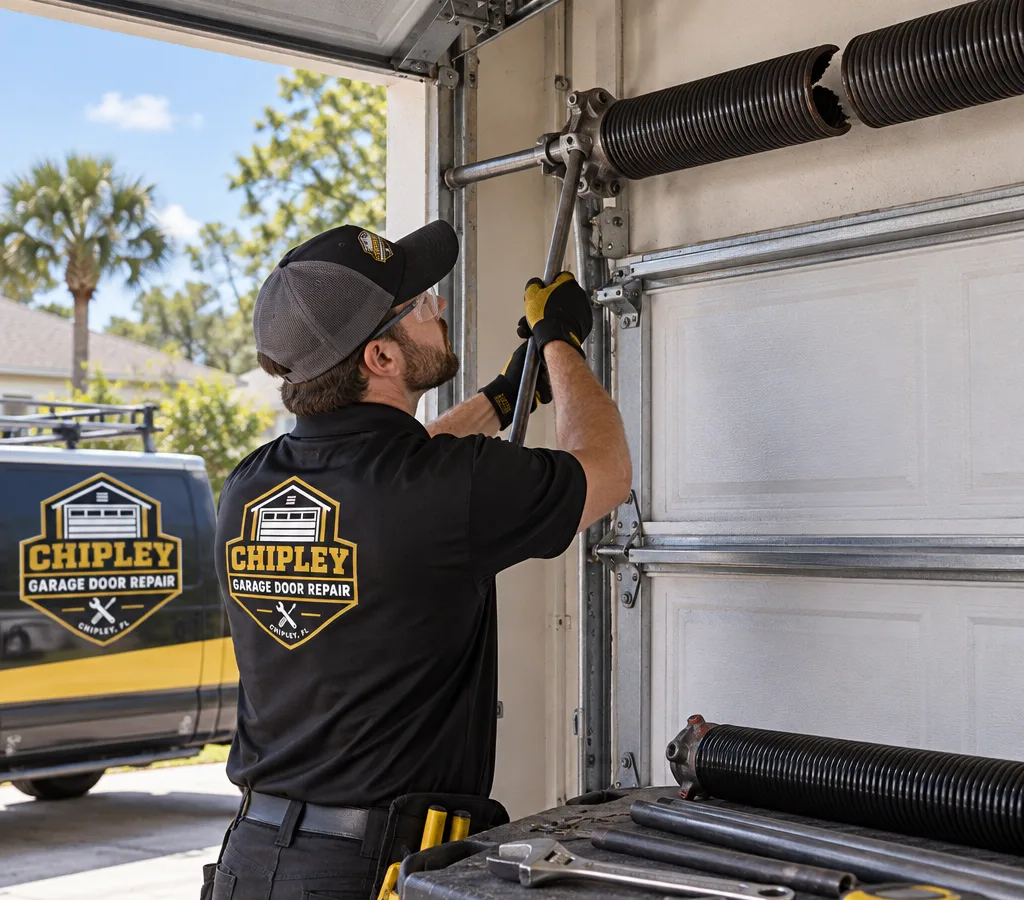
A garage door spring does most of the lifting. When it breaks, the opener is forced to pull far more weight than it was built for, and the door can become unstable.
Common signs a spring has failed:
If you see any of these, leave the door closed if you can. Lifting a door with a broken spring can pull cables off the drums, bend sections, or burn out the opener. For anything spring-related, it is safer and usually cheaper to have it corrected before more parts get damaged.
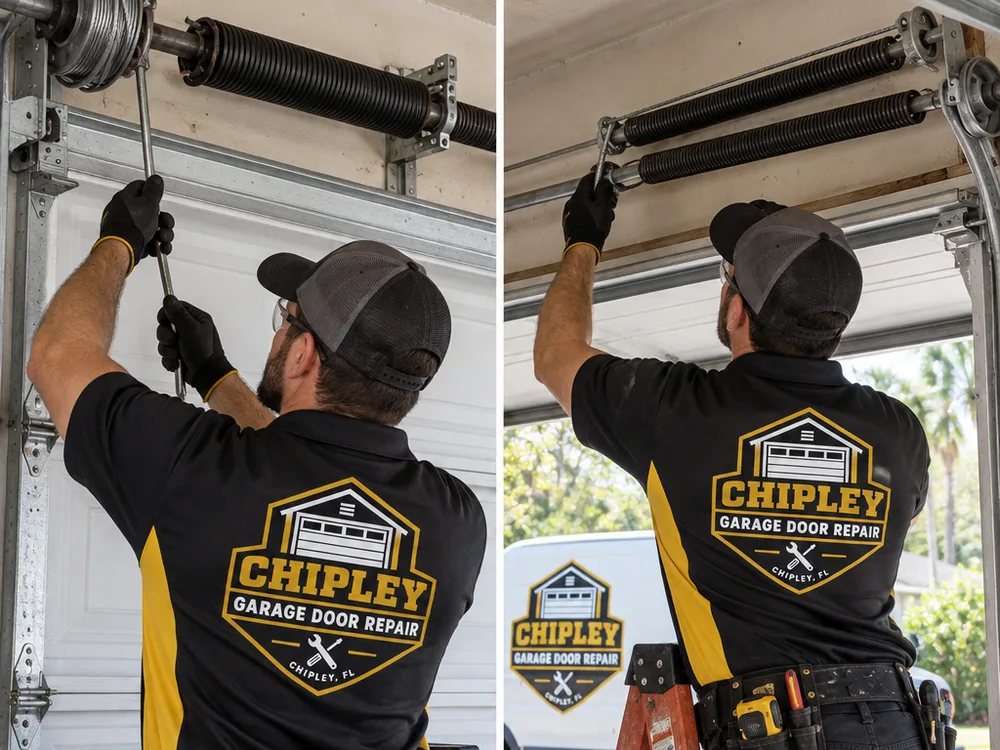
For garage door spring replacement in Chipley, the first step is identifying which system your door uses and matching the spring to the door's actual weight and hardware.
Torsion springs mount on a shaft above the door. They lift the door by twisting and are set by winding to a specific number of turns. Correct sizing and winding matter because the spring controls lift, balance, and how smoothly the door rolls.
Extension springs run along the horizontal tracks on both sides and stretch as the door closes. These must be paired and restrained with safety cables.
Chipley Garage Door Repair replaces the spring or spring set, then checks the full lift system: cables, drums, end bearings, center bearing, rollers, and hinges. A spring replacement is also the right time to correct door balance and limit strain on the opener.
If you are also dealing with a door that is noisy, off track, or simply not moving at all, start with a full diagnostic from Chipley Garage Door Repair so the spring fix addresses the root cause, not just the symptom.
We match wire size, inside diameter, and length to your door's lift needs so the door is balanced and the opener is not overworked.
Broken springs store and release energy. We use proper winding bars, locking methods, and controlled tensioning for a safe swap.
Spring failures often affect cables. We check fraying, drum alignment, and proper seating to reduce the chance of a crooked lift.
After replacement, we confirm the door can stay at mid-travel by hand and then verify the opener's travel and safety reversal behavior.
Rollers, hinges, and bearings can add drag that shortens spring life. We flag worn parts that are increasing load on the system.
We verify whether the spring is broken, undersized, or simply lost tension, then secure the door and disconnect the opener where needed.
For torsion systems, we match the spring to the door's lift requirements. For extension systems, we replace as a pair and confirm safety cable routing.
We install the new spring(s), set tension, and make sure cables track correctly on the drums or pulleys without rubbing or jumping.
A properly sprung door should lift smoothly by hand and hold its position. Then we verify opener travel limits and safety behavior so the system works together.
Springs wear out from normal cycling, but certain conditions shorten their life.
A basic maintenance routine helps: keep rollers and hinges in good shape, watch for frayed cables, and use a garage-door-rated lubricant on springs and bearings. If the door starts to feel heavier or the opener strains, it is worth getting it checked before the spring snaps.
If your garage door is stuck, heavy, or hanging unevenly, a spring issue can turn into cable damage or an opener failure. Get it inspected while the problem is still contained.
CALL NOW: (850) 600-8740Tell us what the door is doing and when it started. You will get a plan for the correct spring replacement and a door that's balanced and easy to operate again.